
These High-Paying Jobs Are Growing -
And They Don't Require a College Degree

By Andy Medici – Senior Reporter, The Playbook, The Business Journals
The rapid growth of artificial intelligence is upending the job market, creating concern about a number of entry-level jobs in various industries, but it’s also fueling growth of a different kind of employment.
The need for electricity to support the tools and services driven by AI is creating demand — and increasing pay — for a number of jobs typically considered blue-collar employment.
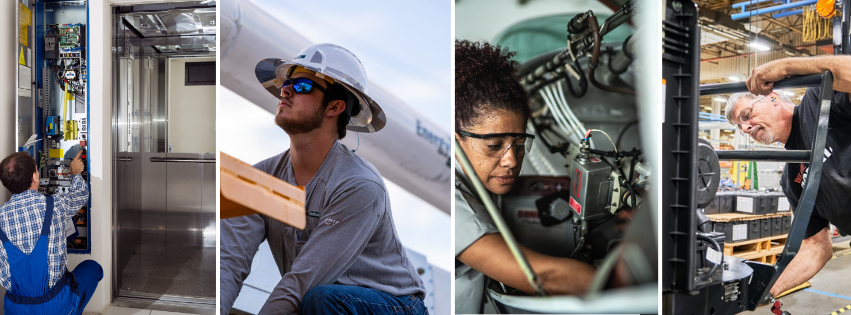
A recent study by Resume Genius of blue-collar jobs looked at occupations that require only a high school diploma and pay more than the median annual salary in the United States — and that were projected to grow between 2024 and 2034.
“A four-year degree isn’t the only path to a high-paying and stable career,” said Resume Genius career expert Nathan Soto in a statement. “We’re seeing a surge in demand for skilled blue-collar professionals, and our data shows employers are willing to pay a premium for their expertise: For 9 jobs on our list, the top 10% of earners make six figures a year.”
While many of the jobs on Resume Genius’ list don’t require advanced degrees, they do often require specialized training, such as an apprenticeship or certification.
The 10 highest-paying blue-collar jobs, according to Resume Genius, along with median annual salary and projected job growth through 2034, are:
- Elevator and escalator technician: $106,580 (+5%)
- Electrical power-line installer and repairer: $92,560 (+7%)
- Aircraft avionics equipment mechanic and technician: $79,140 (+5%)
- Railroad worker: $75,680 (+1%)
- Stationary engineer and boiler operator: $75,190 (+2%)
- Industrial machinery mechanic: $63,510 (+13%)
- Plumber, pipefitter and steamfitter: $62,970 (+4%)
- Wind turbine technician: $62,580 (+50%)
- Electrician: $62,350 (+9%)
- Solar photovoltaic installer: $51,860 (+42%)
Several of the noted highest-paying jobs are seeing an enormous boost from the burgeoning AI industry, which has created a colossal demand for data centers and electricity. That workforce-development trend, and its potential threat to traditional knowledge-work jobs, has put jobs long characterized as blue-collar work in the spotlight.
For its 2025 Annual Blue Collar Report, home-services software provider Jobber surveyed more than 1,000 college- and high-school-aged Americans and more than 1,300 parents of Gen Z students. It found that only 16% of the respondents believe a college degree ensures long-term job security.
Additionally, 73% of the parents surveyed said they believe a trade entrepreneur has more long-term security than a tech employee at a major company. That belief, however, is not impacting career-planning thoughts — at least, not yet. Only 7% of the parents surveyed said they’d prefer their child pursue a trade or vocational program.
Among the students surveyed, 75% of the Gen Z respondents said they still plan to attend a four-year college. Seventy-six percent said four-year college was actively promoted in high school, whereas only 31% said trade school was.