


NC Budget Advances Key Workforce Act Priorities
Governor Josh Stein recently signed into law the state budget passed by the North Carolina General Assembly, advancing many of the priorities championed through the Workforce Act of 2026.
The budget includes more than $8 million in investments supporting the Act’s four pillars—work-based learning, career exploration, seamless education pathways, and employer-valued credentials—marking an important milestone in strengthening North Carolina’s talent development system.
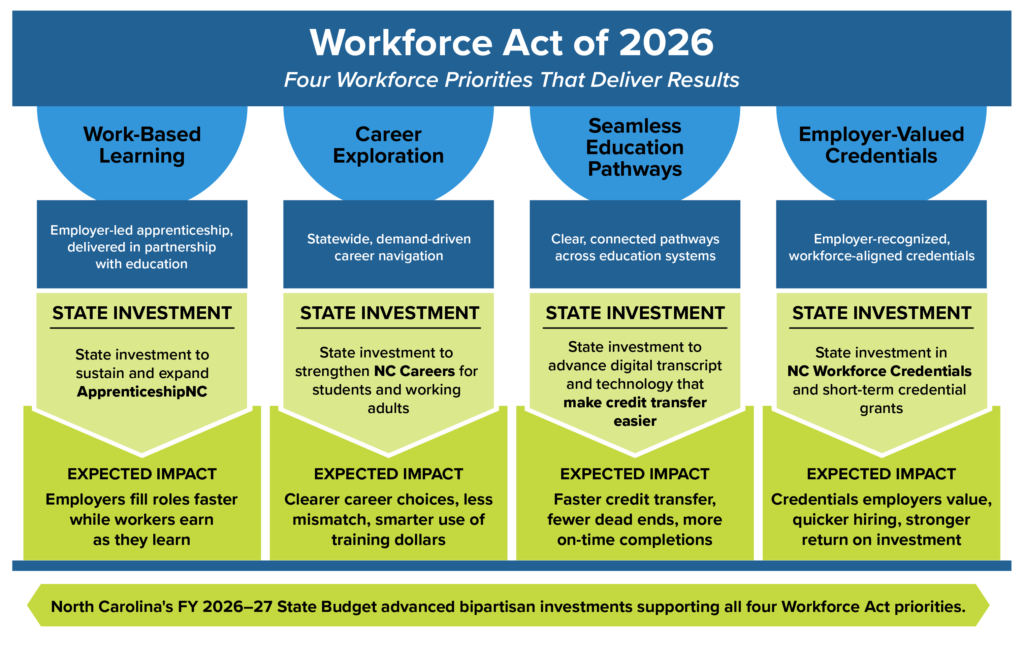
The Workforce Act of 2026 establishes a comprehensive policy framework for strengthening North Carolina’s education-to-workforce continuum by expanding work-based learning, improving career exploration, creating seamless education pathways, and increasing access to employer-valued credentials.
These investments reflect years of collaboration among education leaders, employers, workforce organizations, policymakers, philanthropy, and state agencies to better connect North Carolinians with high-quality education and career opportunities.
“North Carolina’s employers need more skilled talent, and North Carolinians deserve clear pathways to the education and training that lead to opportunity,” said Cecilia Holden, President and CEO of myFutureNC. “The Workforce Act reflects years of collaboration, and today’s investments demonstrate what is possible when partners across sectors work together to strengthen our state’s talent pipeline.”
Workforce Act investments include:
Work-Based Learning
- $3.17 million in recurring funding for ApprenticeshipNC to expand registered apprenticeships across the state.
- Studies to strengthen employer incentives for apprenticeships and expand teacher apprenticeship pathways.
Career Exploration
- $1.37 million to enhance NCcareers.org and strengthen career planning resources.
Seamless Education Pathways
- $2.5 million to expand transfer pathways between North Carolina’s community colleges and UNC System institutions, helping students move more efficiently from two-year to four-year degree programs.
Employer-Valued Credentials
- $1 million for Short-Term Workforce Development Grants that help North Carolinians earn industry-recognized credentials aligned with employer needs.
Additional investments advanced by our partners
In addition to the Workforce Act priorities, the budget includes several important investments advanced by partner organizations and supported by myFutureNC that strengthen North Carolina’s education-to-workforce continuum, including:
- $64.5 million for Propel NC to strengthen workforce-focused community college programs.
- Career and Technical Education improvements, including teacher bonus updates aligned with employer-valued credentials and $2 million for CTE modernization grants.
- Additional investments in higher education, including AdviseNC and need-based financial aid.
- Continued support for teacher pay, early childhood education, and literacy initiatives.
Together, these investments represent meaningful progress toward strengthening North Carolina’s talent pipeline and expanding access to high-quality education, training, and career opportunities that meet the needs of the state’s growing economy.
“North Carolina’s employers need more skilled talent, and North Carolinians deserve clear pathways to the education and training that lead to opportunity,” said Cecilia Holden, President and CEO of myFutureNC. “The Workforce Act reflects years of collaboration, and today’s investments demonstrate what is possible when partners across sectors work together to strengthen our state’s talent pipeline.”